Over the past few months, I’ve been exploring the use of Microsoft Copilot – alongside other AI tools – in the day-to-day management of projects. This experience has offered valuable insights that I believe may be helpful for those looking to integrate AI into their professional routines. Here are a few reflections:
Are tools like Microsoft Copilot changing how Project Managers interact with their teams? Absolutely. These tools are transforming the way we lead. They automate repetitive tasks, generate meeting notes, summaries, reports, and presentations, organize meetings, and even help identify blockers and next steps for each team member. As a result, Project Managers can spend less time on operational execution and more time on what truly adds value: supporting teams, setting direction, and making strategic decisions. The outcome? More efficient project management, with smoother interactions focused on people and key project milestones.
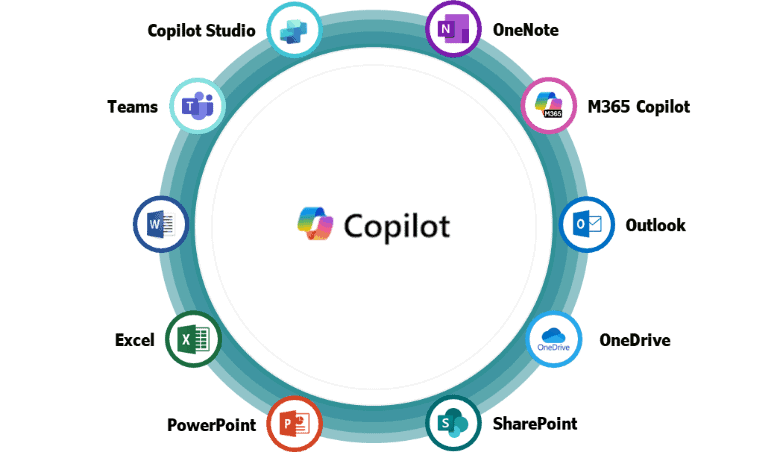
To what extent can AI increase productivity and reduce errors in project management? Tasks that used to consume significant time – like compiling meeting notes or turning technical specifications into presentations – can now be completed in just a few minutes. AI also summarizes emails and Teams conversations, allowing us to quickly catch up on recent discussions, identify outstanding issues, and understand where our input is needed. It’s especially useful after returning from vacation, for example, when there’s a need to get up to speed quickly and efficiently. AI also helps reduce errors by suggesting real-time corrections, automatically validating data, and maintaining consistency across documentation. Moreover, thanks to its integration across the Microsoft ecosystem, Copilot has a broad, connected view of the organization. That said, it’s crucial to remember that AI always requires human validation and oversight.
What are the risks and limitations of relying on tools like Copilot for decision-making or critical project tasks? AI tools should be seen as enablers – not final decision-makers. They can produce inaccurate or biased content, especially when based on incomplete or poorly structured data. That’s why it’s essential for Project Managers to stay actively involved in reviewing and validating the outputs.
Does the introduction of AI tools redefine the role of the Project Manager? Yes, the role is evolving: less execution, more leadership. As AI takes over certain operational tasks, the Project Manager’s focus shifts to people, communication, negotiation, strategic decision-making, and navigating change. This shift, however, requires new skills – such as critically interpreting data, managing technology responsibly, and above all, continuing to lead with empathy and vision. I believe AI is not replacing Project Managers but empowering them. Project management is moving toward a hybrid model where humans and AI work together in synergy.
And you? Are you already using AI in your management tasks? What has changed in the way you work? Which tools are helping you save the most time?
This article was written with the help of AI tools
Carolina Santos
PMO Consultant SCORE | Conclusion